
Powering Digital Growth for Businesses Across Industries




















Our Success Stories







Why Choose Us?
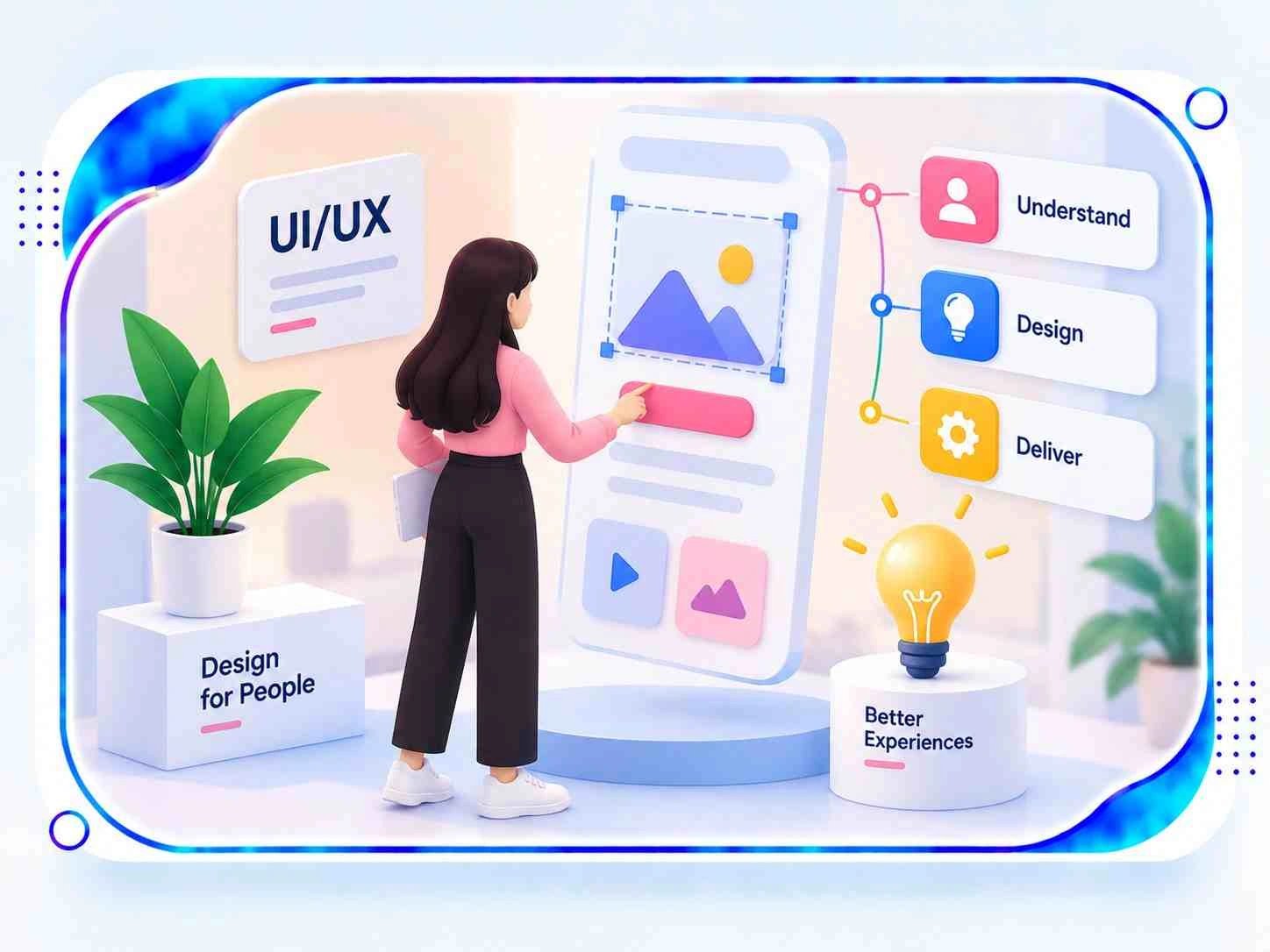
At our UI & UX Design company in Bangalore , our goal is to develop attractive, useful, and purpose-driven interfaces. By blending user research, design of user-friendly interface, navigable sites, and responsiveness, we work with companies to refine their digital interfaces. UI/UX designs at our service can be applied on web pages, mobile apps, Saas software, and other digital environments.
User-Focused Design
Innovative UI Concepts
Insight-Led UX Planning

Wireframes & Prototypes
Adaptive Visual Systems
Conversion-Centered UX
What Makes Linkplux The Best UI & UX Design Service in Bangalore?


What Our Clients Say About Us
LinkPlux UI & UX Design FAQs
FAQs + more
UI & UX Design combines the appearance of a digital interface with the way people interact with it. It covers visual structure, navigation, content arrangement, interactions, accessibility, and usability to create smoother digital journeys. A thoughtful design can make websites, applications, and software products easier to understand while supporting stronger engagement and meaningful user actions.
Professional UI & UX Design can help businesses create digital experiences that are clearer, more accessible, and easier to navigate. A research-led approach can improve website structure, application usability, visual consistency, customer interactions, and digital credibility. For startups, technology brands, eCommerce businesses, SaaS providers, and established organizations, effective design can support better user journeys and business objectives.
UI & UX Design Services can involve discovery research, audience analysis, competitor study, persona development, information architecture, user-flow planning, wireframes, clickable prototypes, visual interface creation, interaction design, responsive layouts, usability evaluation, accessibility planning, and design systems. The scope is tailored according to the product, target audience, functionality, platform, and objectives of each project.
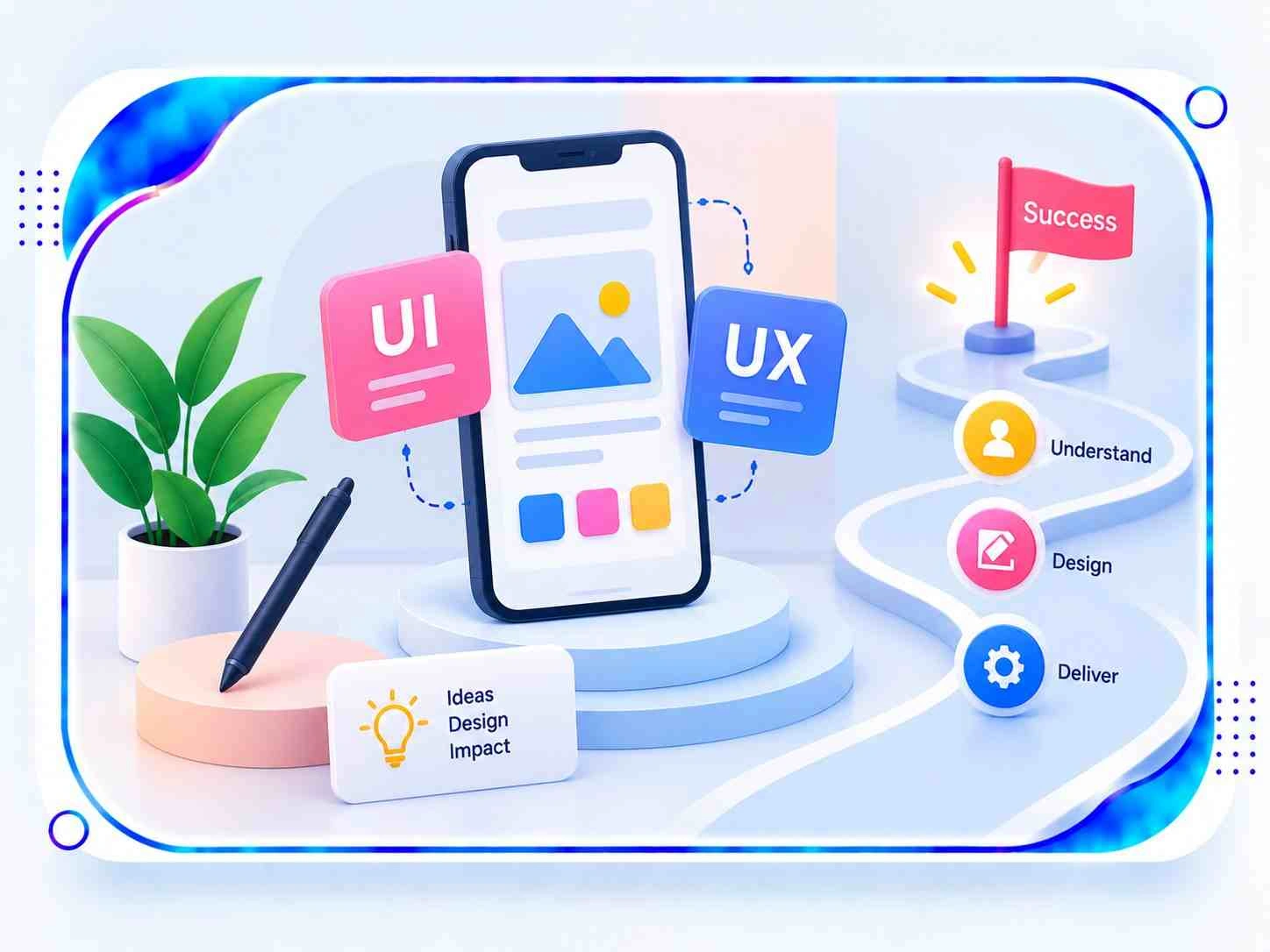
UI Design concentrates on the visual and interactive layer of a product, including typography, colour schemes, spacing, buttons, icons, layouts, imagery, and interface components. UX Design addresses the broader experience by examining user needs, navigation, information structure, task flows, functionality, and usability. Combining both disciplines creates digital products that look coherent and function in a user-friendly manner.
Designers can investigate the intended audience through interviews, questionnaires, behavioural data, customer reviews, analytics, competitor observations, usability sessions, personas, and journey mapping. These methods help reveal motivations, expectations, obstacles, preferences, and common tasks. The resulting insights allow the design team to create interfaces and experiences based on practical user information rather than assumptions.
A well-planned experience can make a website easier to use by arranging information logically, reducing unnecessary steps, strengthening visual hierarchy, improving menus, and presenting important actions clearly. Responsive interface patterns also help maintain consistency across devices. Usability reviews can uncover confusing elements and provide direction for improving navigation, content discovery, forms, and other critical interactions.
Wireframes provide an early blueprint for arranging screens, content, navigation, and functional elements, while prototypes allow teams to experience planned interactions before development. These stages make it easier to review user flows, identify structural problems, collect stakeholder feedback, and make changes early. This can reduce design uncertainty before the final product moves into development.
Yes. UI & UX Design can be developed for Android and iOS applications by planning screen structures, touch interactions, navigation, onboarding, forms, notifications, visual elements, and user flows. Designers can account for different screen dimensions and platform conventions while keeping core functions accessible and understandable. This creates a consistent app experience from the first interaction through regular usage.
Yes. A redesign can begin with an audit of the current website to locate navigation difficulties, outdated interface patterns, inconsistent components, accessibility barriers, and inefficient user journeys. Based on research and business priorities, designers can restructure information, develop new wireframes, create updated visual interfaces, and build responsive layouts while preserving useful elements of the existing website.
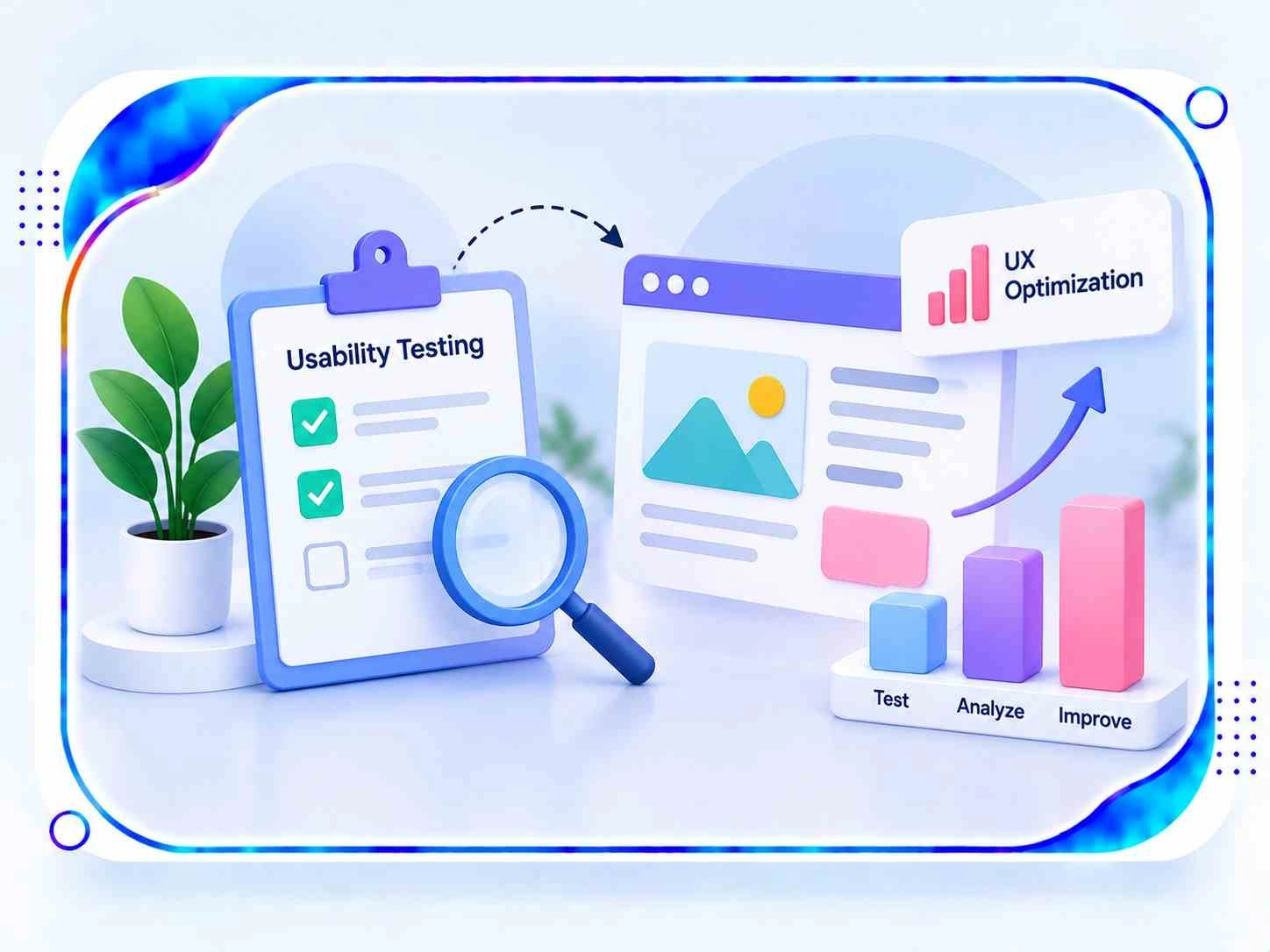
Design effectiveness can be reviewed using usability testing, task completion, interaction data, customer feedback, engagement levels, navigation patterns, accessibility assessments, retention indicators, and conversion-related metrics. The most relevant measurements depend on the product and its objectives. Comparing user behaviour and performance data over time can help identify whether further interface or experience improvements are needed.
The duration depends on the project scope, number of screens, product complexity, research depth, feature requirements, prototype detail, feedback rounds, testing, and design-system needs. A focused website page may require a shorter design cycle, whereas a complete mobile application, SaaS platform, eCommerce product, or enterprise solution may involve several stages of discovery, planning, interface creation, validation, and refinement.
Yes. Clear interfaces and well-structured user journeys can reduce friction and make digital interactions more enjoyable. Simple navigation, relevant information, responsive screens, useful feedback, accessible controls, and well-planned task flows can encourage visitors to explore further and complete meaningful actions. A consistent experience can also contribute to stronger familiarity and trust with a digital product.
Yes. UI & UX Design is suitable for SaaS platforms, enterprise software, dashboards, portals, CRM systems, workflow applications, and other feature-rich products. A structured experience can simplify complicated processes, organize extensive information, establish reusable interface components, and support role-specific workflows. This helps users understand complex platforms and complete recurring tasks with greater clarity.
Businesses can develop a stronger UI & UX strategy by studying audience behaviour, reviewing analytics, understanding customer journeys, simplifying key workflows, defining consistent visual standards, validating prototypes, considering accessibility, and gathering feedback after launch. Regular design reviews and usability checks can reveal friction areas and help teams refine their digital products as user expectations, technology, and business requirements evolve.