
Powering Digital Growth for Businesses Across Industries




















Our Success Stories







Why Choose Us?
The Performance Marketing Company in Chennai mixes audience insights, paid advertising, and conversion optimization to bring growth. The agency uses Google Ads, Meta Ads, and PPC to get leads, better conversions, smart spending, clear reports and lasting returns from ads.
Data-Led Advertising
Precision Audience Targeting
Conversion-Driven Strategy

Google & Meta Advertising
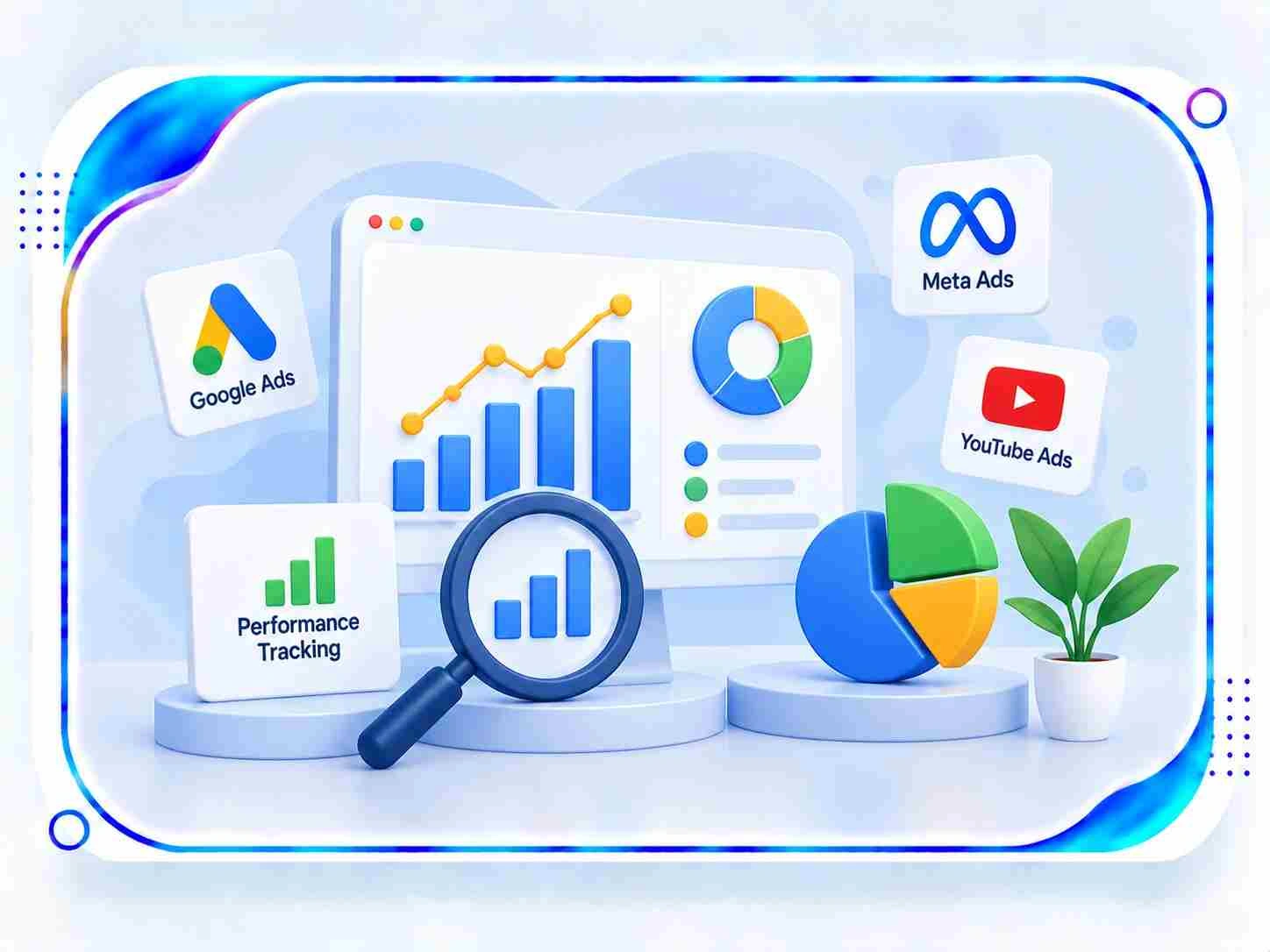
Performance Tracking
ROAS & Business Growth
What Makes Linkplux The Performance Marketing Service Agency in Chennai?

What Our Clients Say About Us
LinkPlux Performance Marketing FAQs
FAQs + more
Performance marketing uses measurable digital advertising activities to attract prospects and encourage valuable actions such as enquiries, purchases, registrations, bookings, and subscriptions. A specialist team can use paid search, social advertising, audience segmentation, remarketing, analytics, and conversion tracking to connect advertising spend with business objectives. Campaign decisions are refined using actual customer and conversion data rather than relying only on impressions or traffic.
Depending on the business objective, a campaign may use Google Search, Shopping, Display, Performance Max, YouTube, Meta advertising, paid social, programmatic media, remarketing, lead acquisition, or eCommerce advertising. Conversion measurement, landing page analysis, creative testing, audience segmentation, and reporting can also form part of the campaign framework. The channel mix is selected according to customer intent, market conditions, sales goals, and available media investment.
Performance marketing places greater emphasis on trackable customer actions and commercial outcomes. Instead of measuring visibility alone, campaigns can be assessed through indicators such as qualified enquiries, transactions, conversion value, acquisition cost, and return on ad spend. Advertising data is reviewed throughout the campaign lifecycle, allowing marketers to test audiences, creatives, offers, keywords, and landing experiences and make adjustments based on observed results.
Campaigns can be structured around different commercial objectives, including lead acquisition, online purchases, appointment requests, product enquiries, registrations, subscriptions, app actions, and customer re-engagement. Audience research and conversion data help determine suitable channels and campaign structures. Businesses can also use paid media to support product launches, seasonal promotions, local customer acquisition, and expansion into new markets.
Relevant indicators can include click-through rate, cost per click, conversion rate, cost per lead, cost per acquisition, customer acquisition cost, conversion value, revenue, return on ad spend, and return on investment. The right KPI depends on the campaign objective and business model. For example, an eCommerce campaign may prioritize revenue and ROAS, while a B2B campaign may place greater importance on qualified leads and acquisition cost.
Specific lead, sales, or revenue figures cannot be assured because advertising outcomes depend on competition, market demand, pricing, offer quality, audience response, website experience, media budget, seasonality, and other external factors. A structured campaign should instead define suitable KPIs, establish tracking, test multiple approaches, and refine the account using actual performance information. This creates a measurable framework for improving campaign outcomes over time.
Audience selection can involve search intent, keywords, demographics, geographic signals, interests, online behaviour, customer lists, platform signals, and previous interactions with a brand. Campaign data helps identify audience groups that show stronger engagement or conversion activity. These insights can then be used to refine targeting, exclusions, messaging, and budget allocation while maintaining relevance throughout the customer journey.
Yes. Paid advertising can be structured around the available investment by narrowing geographic coverage, prioritizing high-intent searches, selecting relevant audience groups, and focusing on specific conversion objectives. Campaign performance can be reviewed regularly to understand where budget is generating useful actions. Based on the data, businesses can adjust channel allocation, bidding, targeting, and campaign priorities as their requirements change.
Conversion improvement can involve refining ad-to-page relevance, testing different messages, improving calls to action, simplifying landing pages, adjusting audience groups, and reviewing user behaviour. A/B testing can compare creative variations or page experiences, while remarketing can reconnect with visitors who previously showed interest. Conversion tracking provides the information required to understand which changes are contributing to stronger customer actions.
Campaigns can be measured using advertising platforms, analytics systems, conversion tags, tag management tools, CRM information, and reporting dashboards. Tracking may cover website actions, enquiries, purchases, revenue, clicks, engagement, acquisition costs, and conversion values. Connecting these signals helps marketers evaluate campaign contribution, identify changes in customer behaviour, and determine which areas require testing or budget adjustments.
Yes. Paid advertising can complement SEO, content development, social media, email marketing, branding, and other organic acquisition activities. Search campaigns can capture existing demand while organic content builds long-term visibility. Campaign data may also reveal useful search terms, audience interests, and customer questions that can inform content planning. Combining channels can create multiple discovery points throughout the buying journey.
Remarketing allows brands to reconnect with people who have previously visited a website, viewed products, interacted with content, or engaged with an earlier advertisement. Follow-up messaging can be tailored to the user's previous interaction and the stage of the buying journey. For suitable campaigns, this can help bring interested visitors back to a product page, enquiry form, booking page, or checkout while supporting additional conversion opportunities.
Data analysis reveals how audiences interact with advertisements and which campaign elements contribute to valuable actions. Marketers can compare keywords, audience groups, creative variations, placements, conversion paths, and acquisition costs to identify useful patterns. These findings support budget planning, testing, targeting refinement, and campaign scaling. Ongoing analysis also makes it easier to respond to changes in search demand, customer preferences, and advertising performance.
Performance advertising can be adapted for startups and smaller companies by defining a focused audience, selecting suitable channels, setting clear conversion goals, and controlling the initial media investment. Local businesses can target specific areas, while online brands can reach selected customer segments based on intent and behaviour. Regular reporting helps smaller teams understand campaign contribution and decide when to adjust targeting, expand coverage, or redistribute their advertising budget.