
Powering Digital Growth for Businesses Across Industries




















Our Success Stories







Why Choose Us?
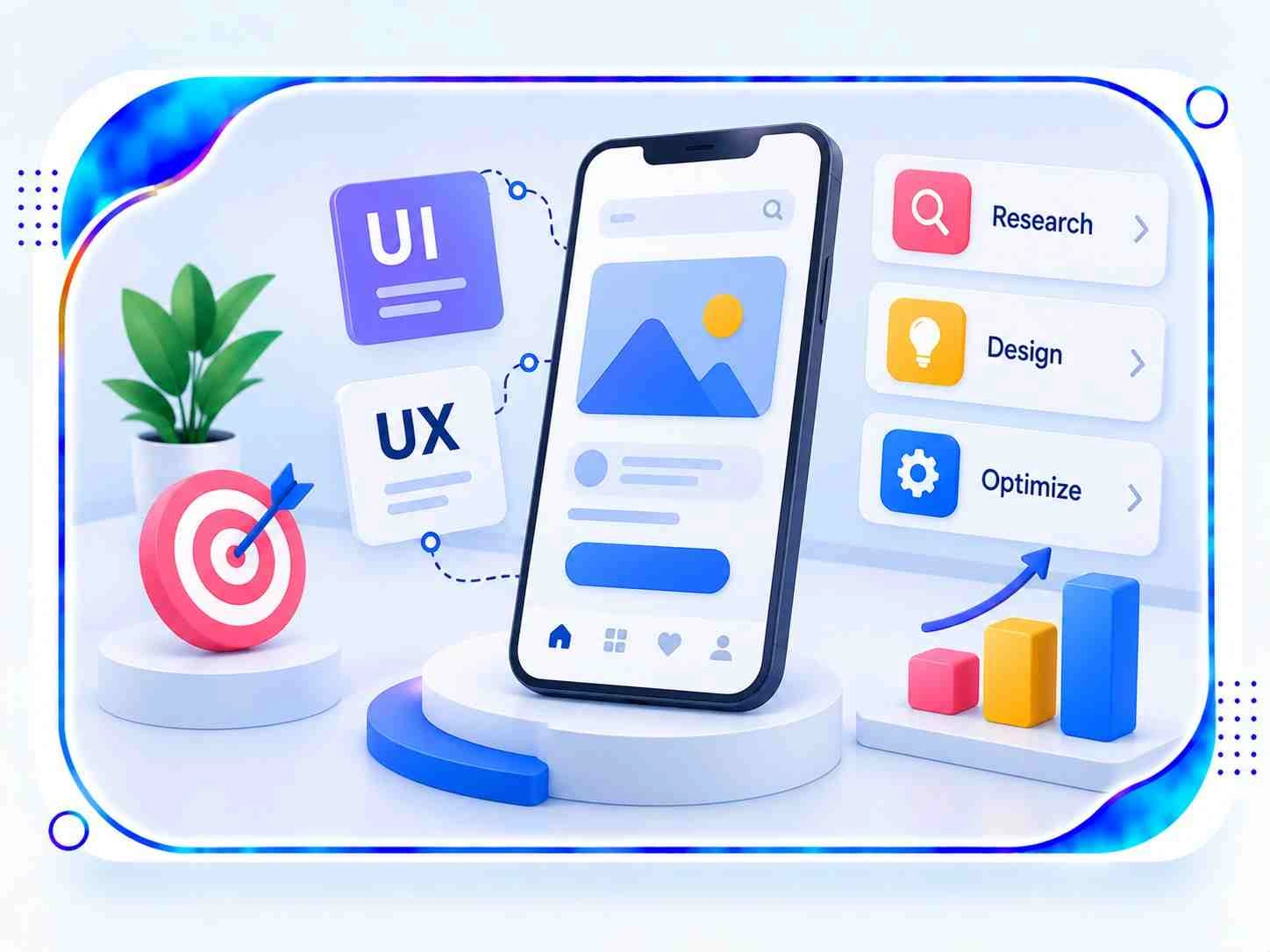
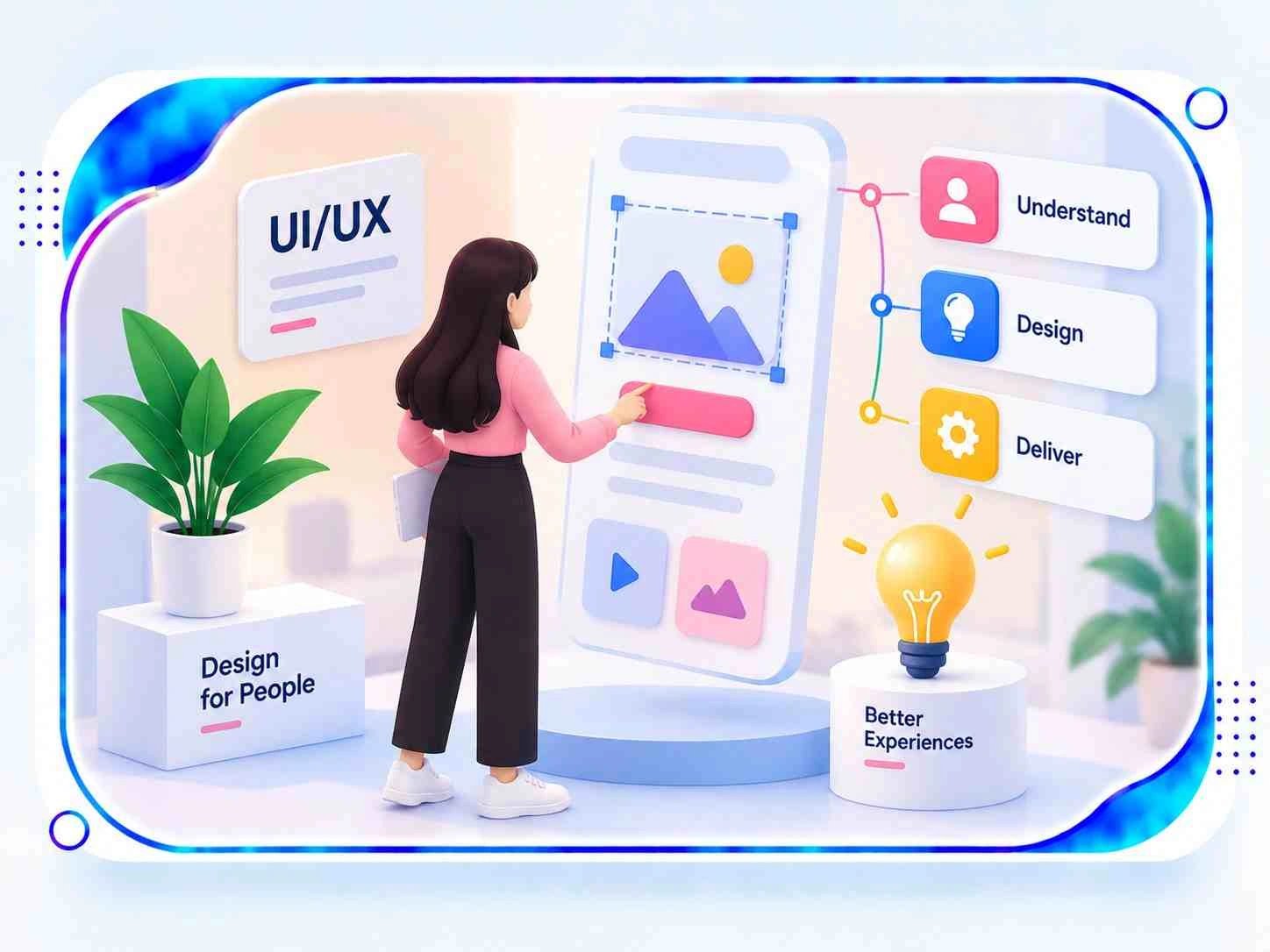
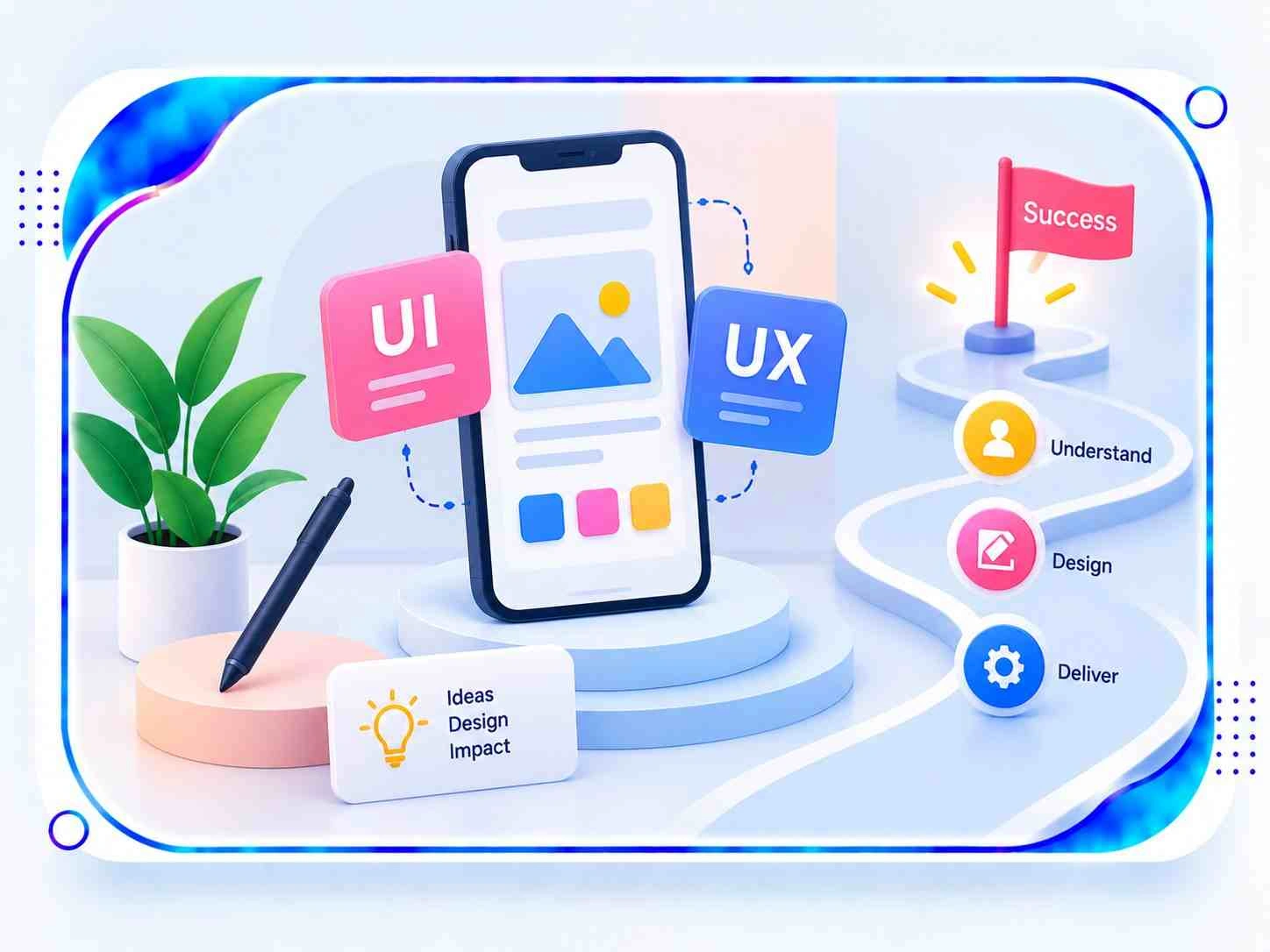
At our UI/UX Design company in Mumbai, we create engaging, functional, and user-friendly digital interfaces. Through user research, intuitive layouts, accessible websites, and responsive designs, we help businesses improve their digital experiences. Our UI/UX design services support websites, mobile apps, SaaS platforms, and other digital products, with a focus on usability, engagement, and conversions.
Intuitive User Experiences
Creative Interface Design
Research-Based UX Strategy

Prototypes & User Flows
Responsive Design Systems
User Journey Optimization
What Makes Linkplux The Best UI & UX Design Service in Mumbai?

What Our Clients Say About Us
LinkPlux UI & UX Design FAQs
FAQs + more
UI/UX design services combine visual interface creation with planning how people use websites, mobile applications, and software. They include user research, navigation design, wireframing, prototyping, accessibility, and usability evaluation. A well-planned experience helps visitors understand features, locate information, complete tasks efficiently, and interact confidently with a digital product.
Working with a UI/UX design agency in Mumbai helps businesses develop digital experiences around customer expectations and commercial goals. Professional designers can improve website navigation, refine mobile interfaces, establish consistent branding, and identify usability concerns. These services can benefit startups, e-commerce companies, SaaS providers, and established businesses seeking more effective digital products and customer interactions.
UI/UX design services generally cover user research services, competitor analysis, information architecture, customer journey mapping, wireframes, interactive prototypes, website UI design, mobile app UX design, and visual interface development. Projects may also include design system creation, responsive layouts, accessibility reviews, usability testing services, and experience optimization according to the product's requirements and intended audience.
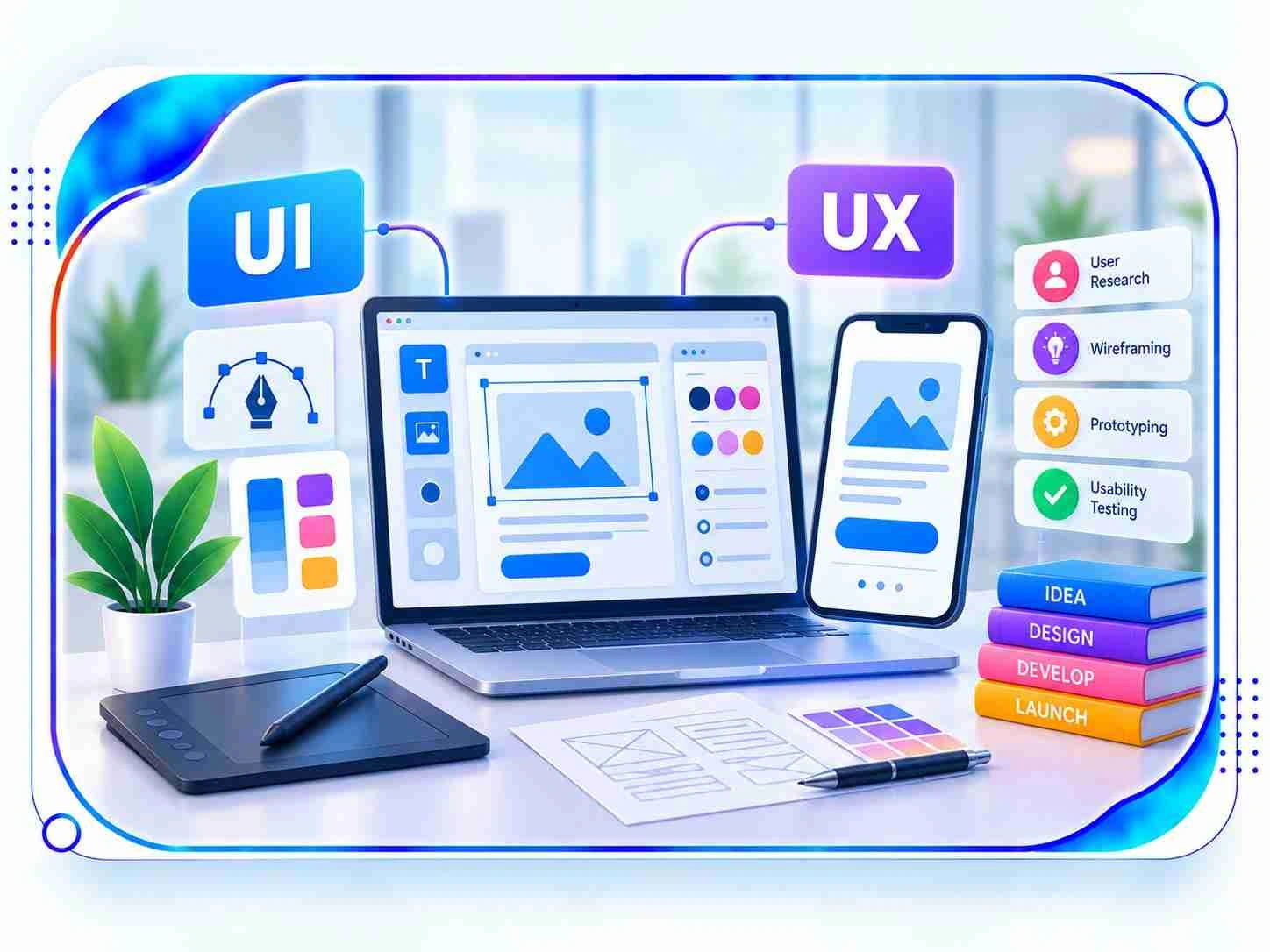
UI design focuses on the interface's appearance, including typography, colours, icons, buttons, layouts, and visual elements. UX design considers the complete experience, such as navigation, user expectations, information structure, and task completion. Understanding UI design vs UX design helps businesses combine attractive visuals with practical functionality. Both disciplines work together to create accessible, intuitive, and consistent digital products.
User research services reveal how customers think, what they expect, and where they encounter difficulties. Designers can use interviews, surveys, analytics, customer feedback, competitor reviews, and usability sessions to identify patterns and priorities. These findings inform user personas, journey maps, content structure, and interface decisions, helping businesses create experiences based on real audience needs rather than assumptions.
Professional UX design makes websites easier to navigate by organizing content logically, improving page hierarchy, simplifying forms, and clarifying important actions. Responsive layouts help maintain a consistent experience across devices, while accessible interface elements support different user needs. Following UX design best practices can reduce confusion, improve information discovery, and help visitors complete essential tasks more comfortably.
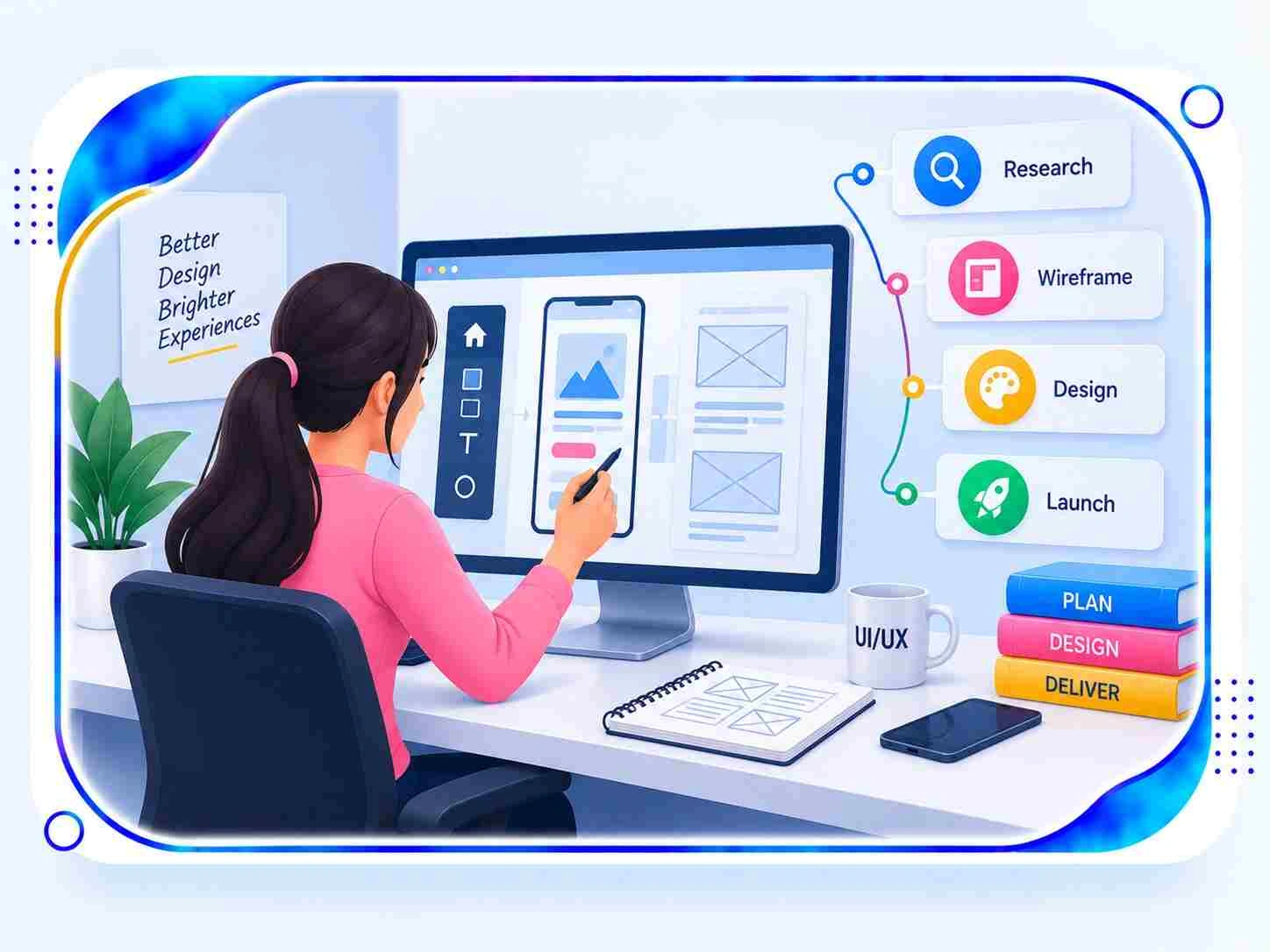
Wireframes outline the arrangement of content, controls, and navigation before detailed visual design begins. Prototypes demonstrate how screens connect and how interactions behave. Together, they help teams review the UX design process, test user flows, gather feedback, and discover structural problems before development. Early validation also makes design revisions easier to manage and improves communication between designers and developers.
Yes. Mobile app UX design addresses touch controls, screen layouts, onboarding, menus, notifications, forms, and task flows for smartphone users. Designers consider platform conventions, screen sizes, readability, and accessibility to make essential features easy to reach. Applying mobile UX guidelines helps create convenient experiences for Android and iOS applications while maintaining consistent branding and straightforward navigation.
A UI/UX redesign can address outdated layouts, unclear menus, inconsistent page elements, accessibility concerns, and difficult user journeys. The process usually begins with a website review and audience analysis before moving into improved information architecture, updated visual concepts, and responsive interface design. Preserving useful content while correcting usability issues can make the website easier to explore and better aligned with current business goals.
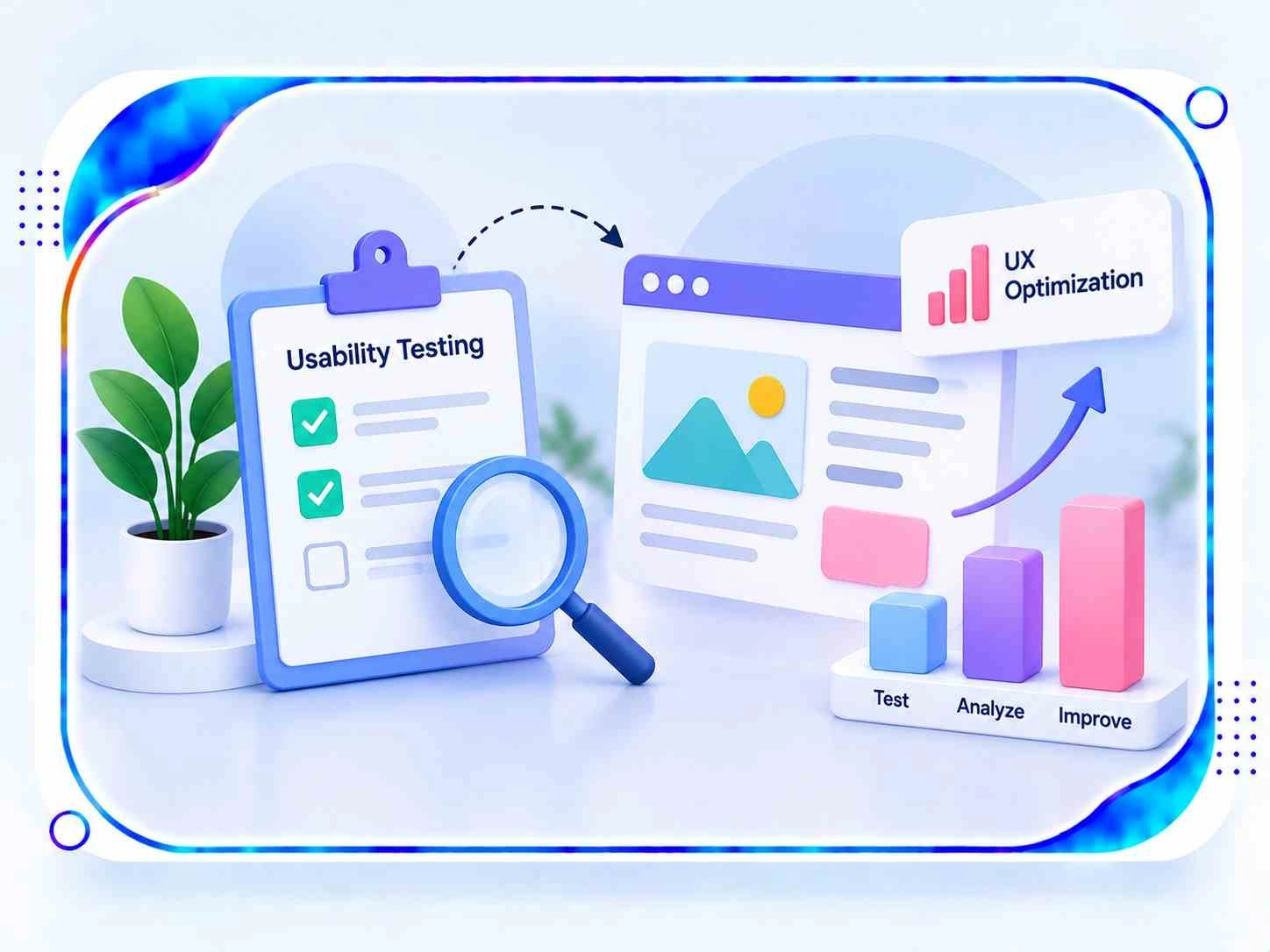
Businesses can evaluate design performance through usability testing services, task completion rates, navigation analytics, customer feedback, engagement indicators, accessibility reviews, and conversion data. The appropriate measures depend on the product's purpose and target audience. Tracking these indicators over time helps identify successful design changes, uncover remaining obstacles, and prioritize future improvements based on observable user behavior.
Project pricing and timelines depend on the number of screens, feature complexity, research requirements, prototype detail, testing scope, revision rounds, and design system requirements. A small website interface may need less effort than a complex e-commerce platform or enterprise application. Clear project objectives and an agreed scope help establish realistic delivery schedules and budgets for UI/UX design services in Mumbai.
A clear user experience helps visitors understand product benefits, find relevant information, and move through important actions with fewer obstacles. Thoughtful navigation, useful calls to action, streamlined checkout flows, and responsive layouts can support engagement and conversion goals. Reviewing user behavior and testing design alternatives helps businesses determine which improvements make their digital experiences more effective.
UI/UX design is valuable for SaaS products, enterprise dashboards, CRM systems, business portals, and complex software applications. A well-structured interface can organize large amounts of information, simplify recurring workflows, and make advanced features easier to understand. A design system agency can also establish reusable components and consistent interface guidelines, helping product teams maintain quality as applications expand.
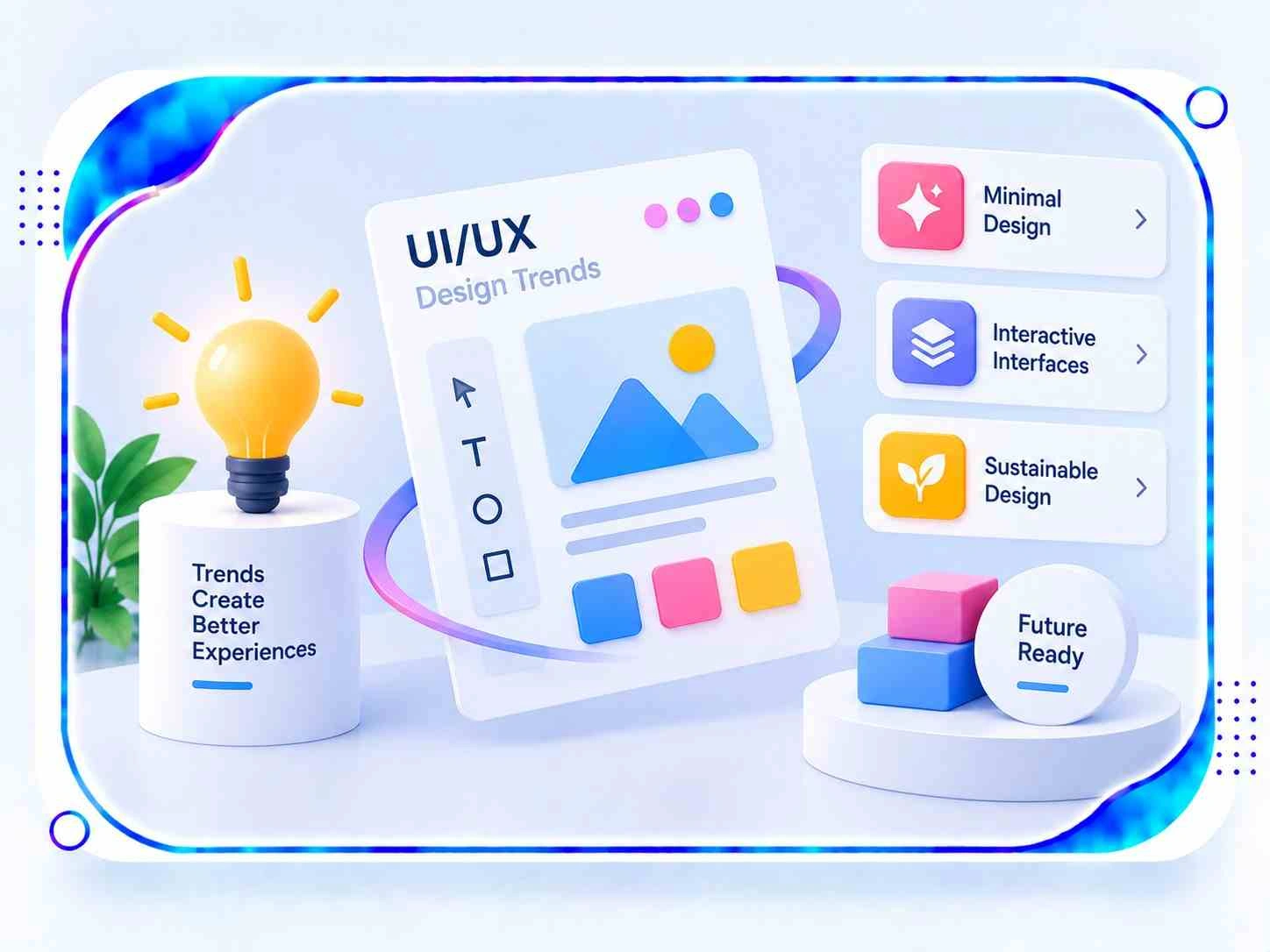
Businesses should consider accessible design, mobile-first layouts, consistent design systems, meaningful micro-interactions, personalization, and straightforward navigation when reviewing emerging UI/UX design trends. The right choices depend on customer needs, product functionality, and industry context rather than popularity alone. Exploring UI/UX design portfolio examples and case studies in UX improvement can provide inspiration, while ongoing research and usability reviews help validate which approaches work best.